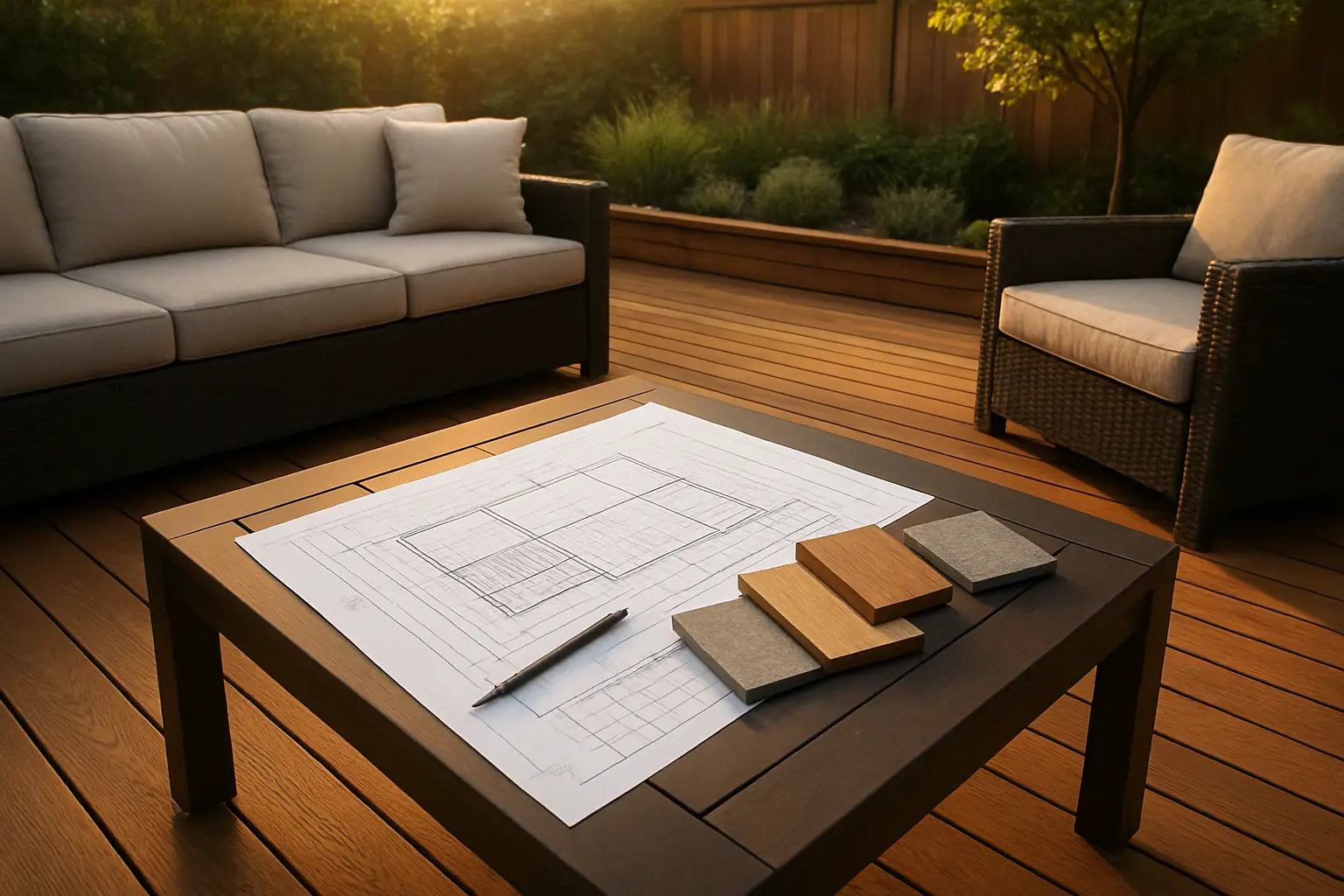
Cosmetic or Limited Wear
Surface-board damage, finish deterioration, localized railing issues, or isolated wear may support a repair discussion when the framing and supports remain suitable after inspection.
In Langley, outdoor decks take a constant beating from rain, moisture, and seasonal changes. Over time, every deck reaches a point where homeowners need to decide whether to repair it or fully replace it.
This decision is not just about appearance. It directly affects safety, structural integrity, long-term cost, and how the outdoor space can be used.
Deck repair focuses on specific damaged components while keeping the main structure in place. Whether repair is appropriate depends on the condition of the framing, posts, connections, stairs, guards, and other structural elements, which should be assessed on site rather than judged from surface appearance alone.
Common deck repairs include:
Deck replacement is a full rebuild of the structure, often down to the framing or foundation level. Replacement is essentially building a new deck rather than restoring the old one.
This can include:
The key factor is the condition of the structure, not just how the deck looks. Surface wear can be cosmetic, while deterioration affecting posts, joists, beams, connections, stairs, guards, or foundations may require a broader scope. A checklist or photo alone cannot confirm structural condition.
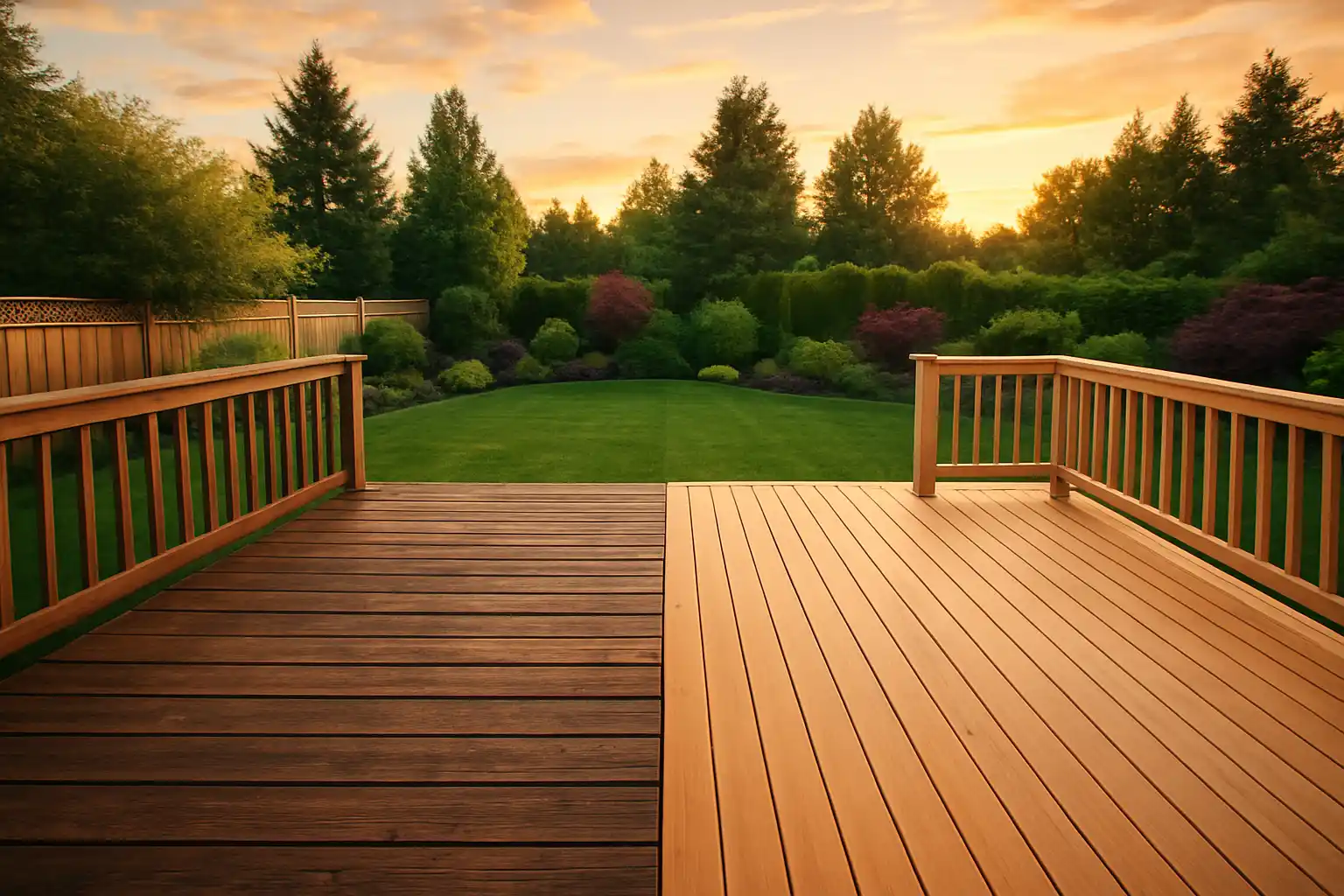
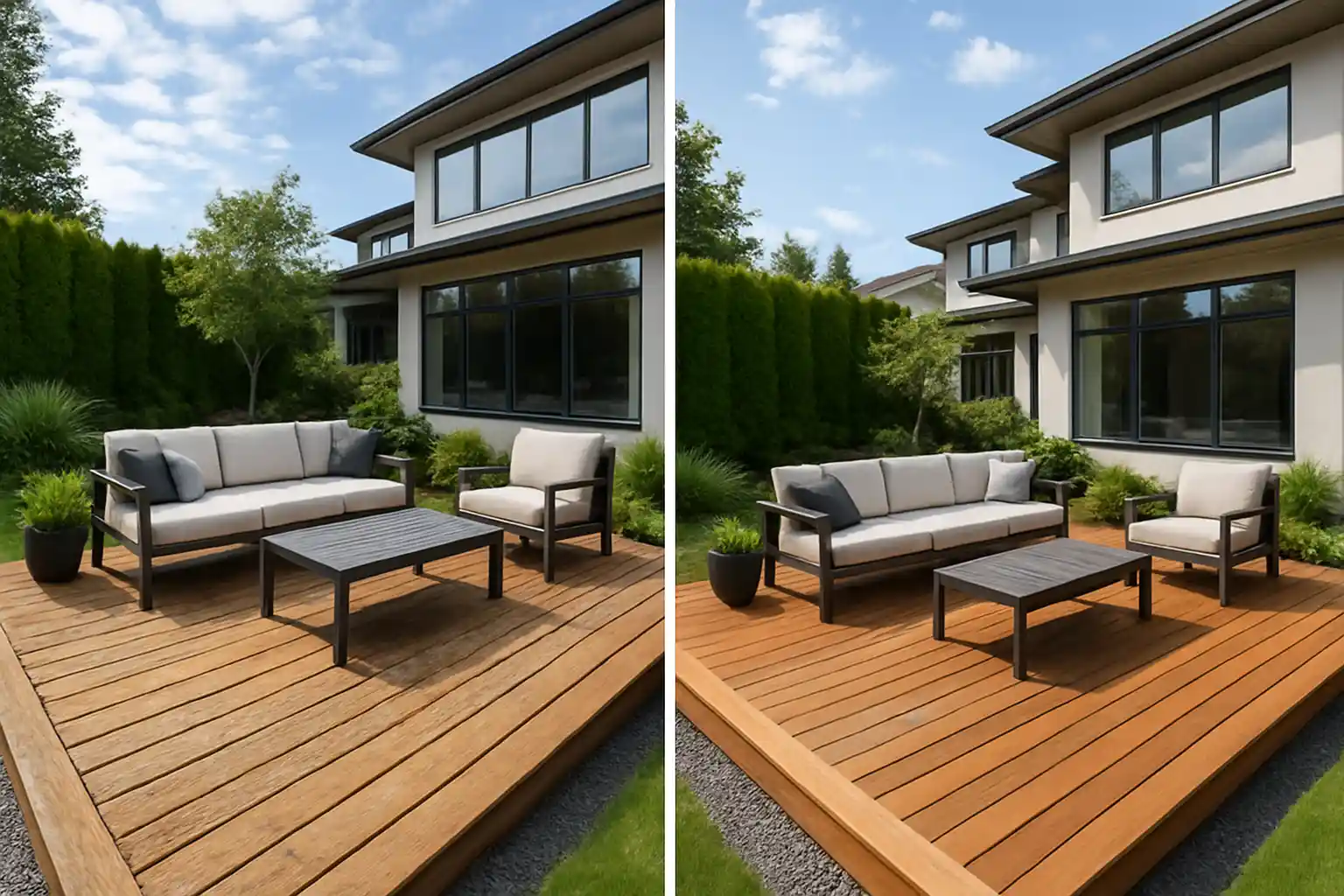
Photos can help illustrate what to look at, but they cannot confirm whether a deck is structurally safe. Use these examples as a visual guide only and request an on-site assessment before deciding between repair and replacement.
Surface-board damage, finish deterioration, localized railing issues, or isolated wear may support a repair discussion when the framing and supports remain suitable after inspection.
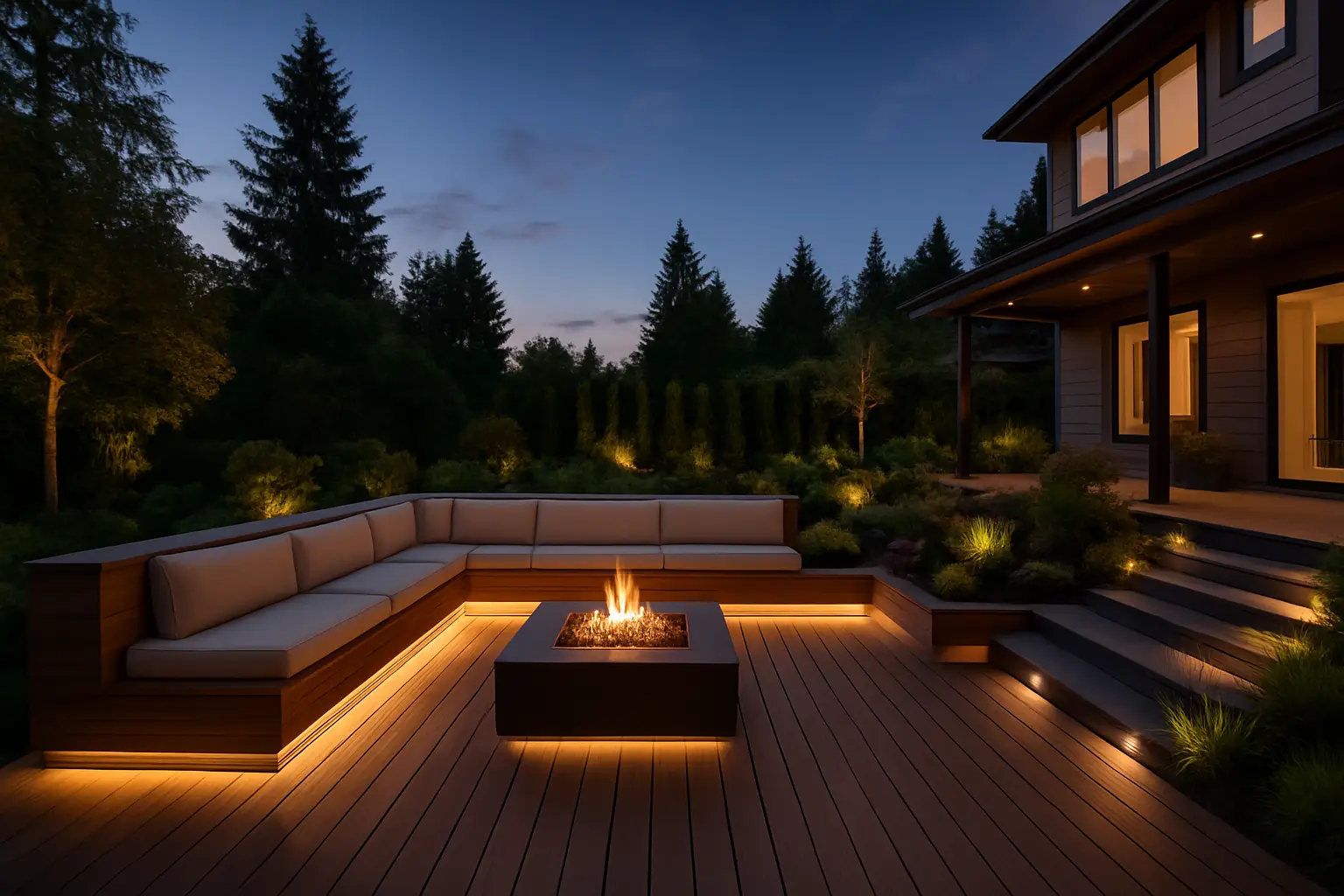
Movement, widespread decay, compromised framing, failing connections, or support problems can indicate that a larger repair or replacement scope should be evaluated on site.
Where deterioration is widespread, repeated repair work may become less practical than a broader rebuild. The appropriate choice depends on the actual condition, required scope, and planned service life.
Langley’s wet climate accelerates wood deterioration, especially in areas with poor drainage. An on-site assessment is more useful than appearance alone when deciding between repair and replacement.
This leads to:
Some decks fall into a middle category where partial rebuilds make sense. These hybrid solutions depend on how much of the original deck is still viable.
A localized repair may require less work upfront than replacement, but long-term value depends on the remaining condition of the structure, repair history, materials, and the amount of work still required.